9 important things before you start building a house or looking for a new home
Publication date: 15. october 2025
Finding a new home or deciding to build is one of the most important decisions in life.
It is about more than just walls and a roof; you are creating a space where you will write the story of your life. That is why it is crucial to embark on this journey thoughtfully, with clear goals and the right information.
1. How do you really want to live?
Before you look at the first property or dive into architectural sketches, take time to reflect.
What kind of life do you want in your new home? Is it a retreat into nature, a small house for two, a house just big enough for a family, a space for multigenerational living, or an apartment in the middle of the city's hustle and bustle? Don’t be seduced only by trends and perfect Instagram images or by chasing the standard of living of an acquaintance who is building a veritable villa. Your home should be a reflection of your lifestyle, not the ideals of others.
+
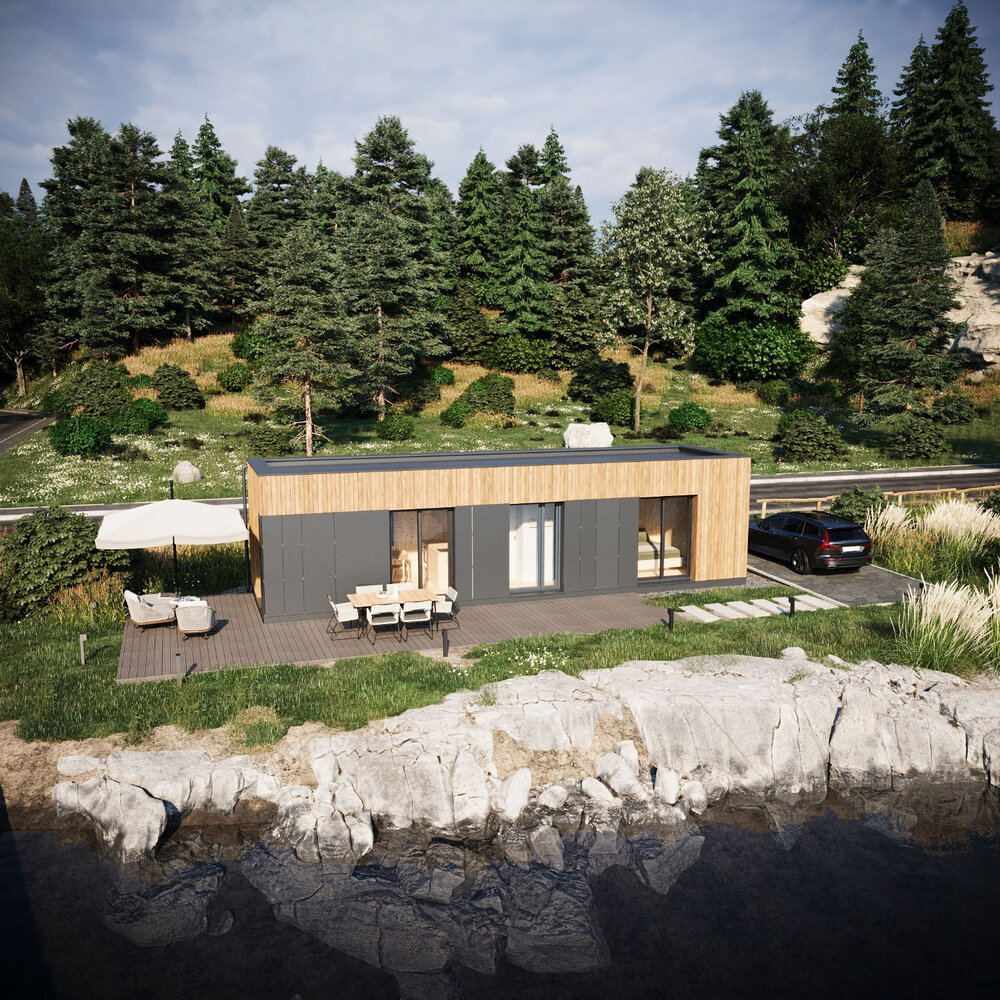
With Cubie modular homes, we follow the saying “Fewer square meters, more life”. If you see yourself in an 80 m² apartment in a block, why couldn’t you live 'only' in 80 m² somewhere in nature, in your own oasis of peace and a break from the fast pace of life? Our main mission, namely, is “Bringing people back to nature”.
2. Think long-term
A home is not a project for a year or two. An apartment in a block perhaps is; after a few years you simply replace it with a smaller or larger apartment. But if you are looking for a house or plan to build, consider how your life will change in 5, 10, 20 years.
Does the house allow flexibility - for a growing family, working from home, aging? Are you sure how many children's rooms you will need? What about after the children leave home, will the house be half empty, only calling for the maintenance of unnecessary spaces?
Do you know the differences in construction*? What options do masonry, timber frame, prefabricated, or modular construction offer?
A long-term vision will help you choose a solution that will serve you well for a long time.
+
Cubie modular homes grow with you. At first, you get a small house for 2, and later add a module with children's rooms. When the children leave, you move the module to another location and it will serve you as a holiday home. Assuming that the modules were designed from the very beginning with this kind of long-term purpose in mind.
-
*Read the blog where we explain the differences between masonry, modular, prefabricated, and timber frame construction.
3. Location, location, location.
Life in the city, at the center of all the action, the fast pace of life, when you have everything within walking distance, which also requires its own investment and is becoming increasingly unattainable for many, or peace somewhere in nature?
Choosing a plot is not just a matter of price and view. Think about accessibility, sunlight exposure, proximity to the infrastructure that is important to you, and also any possible construction restrictions. Every location has its advantages and pitfalls, so take your time and consult experts or even local residents.
However, interest in and migration to the countryside is increasing again, mainly due to the desire for spacious meadows in front of the house and the proximity of untouched forest nature, as well as a more financially affordable solution. Therefore, some villages are coming back to life and consequently also have, for example, well-organized transport to school, nearby shops, or organized mobile shops visiting the surrounding houses...
In short, when buying a plot or a house, always consider the long-term consequences and possibilities. Before deciding to buy, check the location information (an official document issued by the municipality containing data on spatial conditions for construction on a specific piece of land).
+
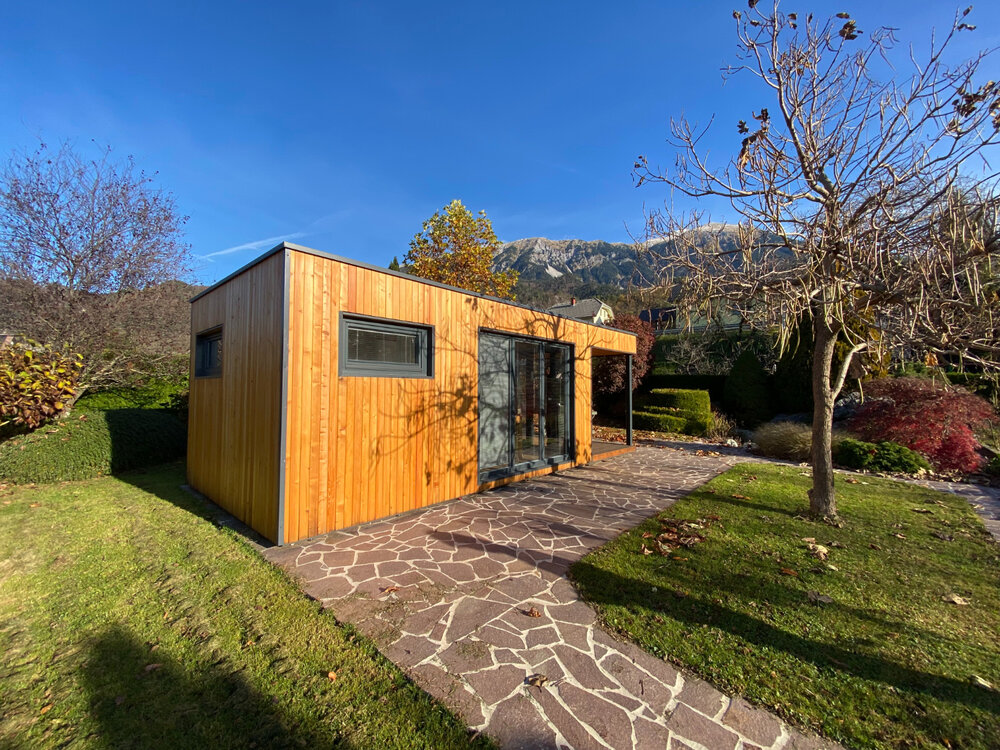
Did you know that one of the advantages of modular houses is that you can also easily move them after some time?
4. Legal and construction procedures.
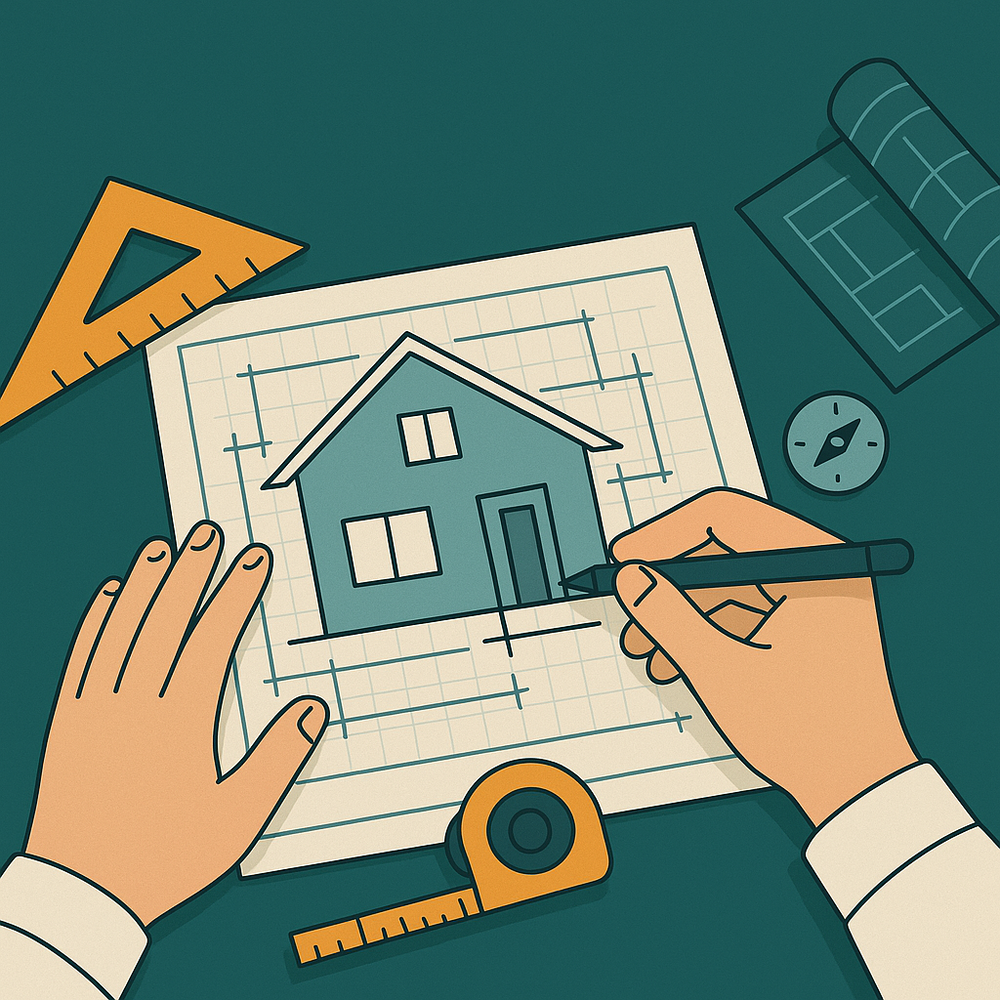
People often underestimate how much bureaucracy is involved in construction. From obtaining a building permit* to project documentation and coordinating with local regulations.
+
In modular construction, such as Cubie houses, the paperwork is simplified, (we create the house plans ourselves and there is no need for additional work by an architect; you do not need a structural engineer, mechanical or electrical engineer...) and consequently it is cheaper, which saves you a lot of time and stress. However, it is still necessary to get in touch with an architect who, as an authorized professional, handles the documentation for obtaining the building permit.
+
At Hrovat, we work with an architect specialized in modular construction and can therefore offer you turnkey services, although you can of course also choose an architect of your own choice.
-
*Read more about everything you need to obtain a building permit for a traditional house and why the paperwork for a modular house building permit is simplified.
5. Costs are not just a number.
A realistic budget is your best friend. Construction quickly becomes a financial black hole if you don’t have a clear picture of the costs.
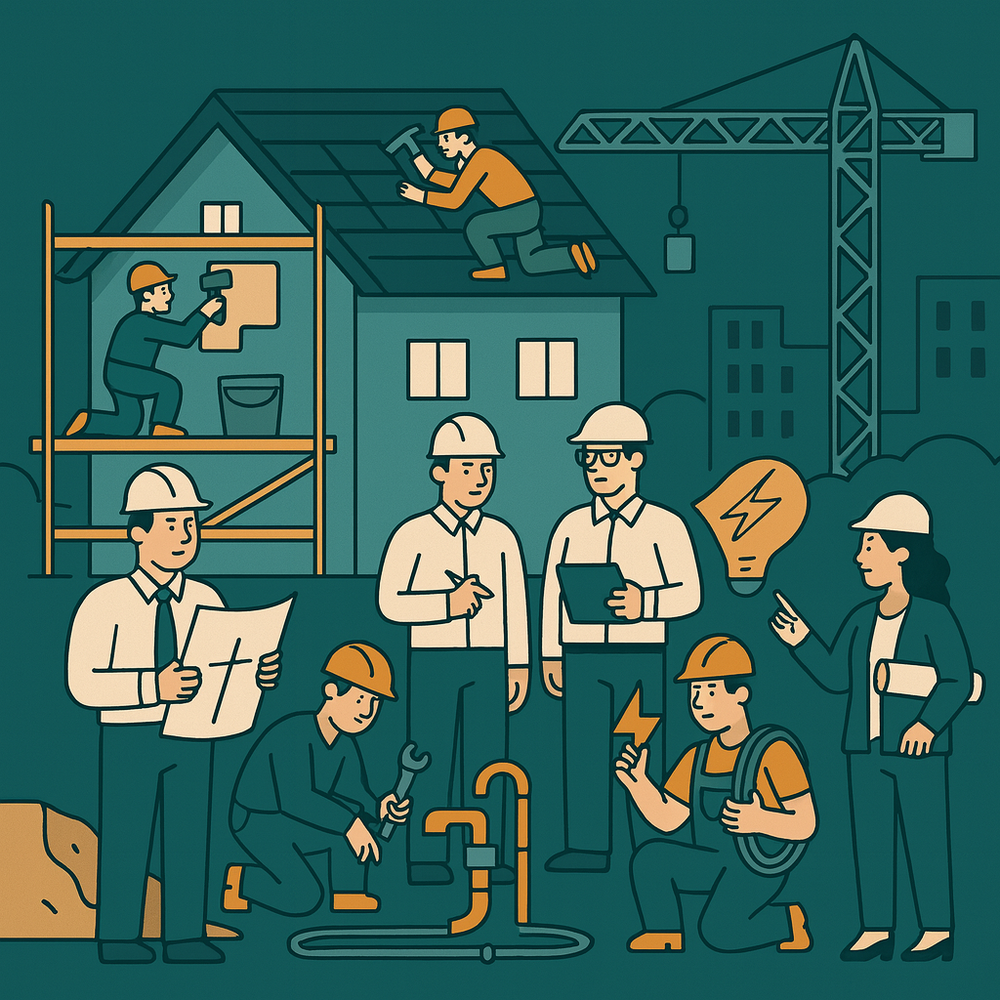
Let us list a few subcontractors you need to hire even before you start building (masonry, prefabricated, timber-frame house...), in order to first obtain a building permit and then begin construction.
- Architect: prepares the conceptual design (IDZ), documentation for obtaining project and other conditions (DPP) and the building permit (DGD or PGD), and after the building permit is obtained, prepares the detailed design for execution of works (PZI), on the basis of which the contractor can later give you an approximate quote.
- The architect submits the DGD documentation together with various approvals prepared by contact persons from different fields (municipal services, electricity, water supply, fire department, neighbors…).
- Structural engineer: calculates the required load-bearing capacity of the structure.
- Geotechnical engineer: prepares a geotechnical soil report on the basis of which the foundations are determined (if required by the municipal spatial plan - OPN).
- Hydrologist: carries out a flood study (if required by the OPN).
- Surveyor: prepares a geodetic survey of the land before construction, stakes out the plot for construction, and after completion prepares an as-built geodetic survey to obtain the occupancy permit.
- Mechanical/plumbing and electrical engineer: for the purposes of the PZI, they prepare technical plans for plumbing and electrical installations.
Then comes the construction itself. Expect construction companies or subcontractors to often send you an approximate or favorable quote, but during construction a range of additional unexpected costs arises, as well as delays and construction errors (for which subcontractors do not take responsibility and shift it to other contractors), and you as the investor again cover the resulting costs.
During construction you need:
- A civil engineer for construction supervision: during construction, which can last up to 3 years, this person supervises whether the construction is carried out in accordance with the project documentation, the quality of materials, the timeline, and the appropriateness of execution procedures.
- A construction company to make the concrete foundation slab, and possibly also piles (if determined by the geotechnical report).
- A construction company to build your house.
- Roofers to make the roof.
- Facade contractors for the facade.
- An electrician for electrical wiring, outlets, switches.
- A plumber for laying water pipes, installing valves.
- A drywall contractor: installation of partition walls, suspended ceilings, cladding, protective coverings.
- A flooring contractor (parquet installer, tiler…): laying parquet and/or ceramic tiles
- A mechanical installations contractor: installation of the heating and ventilation system
- Plasterer, painter: for interior plastering, smoothing walls and ceilings (preparation for painting), whitewashing/wallpapering walls
- A joinery contractor: installation of interior and exterior doors, windows, balcony doors
- Glazier: installation of glass elements
- Sanitary installer: installation of bathroom equipment and connection to plumbing systems.
- Cleaning service: after all construction work is completed, a large amount of dust, waste, and leftover materials accumulates, so deep cleaning and garbage removal are required.
In addition to the construction itself, also count on utility connections, landscape architects if you decide to have the surroundings arranged by professionals, and other non-essential contractors (network installer, anti-burglary systems, locksmith and stonemasonry work…), as well as a carpenter for custom-made furniture. In short, always leave some reserve, because with so many different contractors, you can quickly miscalculate.
+
In modular construction, one of the biggest advantages is precisely the fixed price, with clear items and no hidden surprises. The vast majority of the work is carried out by the experts from the Hrovat team, so for your dream holiday cottage or turnkey home, you only need:
- an architect, who takes care of arranging the building permit (the plans are handled by the Hrovat team),
- a surveyor, who measures and stakes out the location for the foundations,
- a construction company, which makes the concrete foundation slab,
- a construction supervisor, only during the installation of the concrete foundation slab…
… everything else is done by the coordinated and professional team of Hrovat, while you enjoy your leisure activities in the meantime.
When it is time to install the house, a 1-module house is set up and ready to move into within a few hours, while for a house made of several modules and/or with a gable roof, we need 2–10 days. After that, you can already start moving furniture in and begin a new chapter of life.
6. Do you have time to build, or would you rather choose a finished property?
Building a house* requires a huge amount of coordination, decision-making, supervision, finding contractors, comparing offers, resolving unforeseen situations, and making quick decisions that you may not be familiar with as a layperson. In point 5, we listed at least 20 different subcontractors who first need to be found, all arrangements made with them, and then coordinated with one another, assuming that for some good contractors you need to wait several months, while some do not even stick to the agreed deadlines.
If you have a demanding job, small children, or a desire for peace, traditional construction can be extremely stressful and can even take several years.
+
That is precisely why more and more people are choosing turnkey solutions, including modular construction, where an experienced team takes care of most of the procedures. This saves you time, nerves, energy, and ultimately money. At Hrovat, we take the entire construction process under our wing. While you enjoy your everyday life, we manufacture your house in 3 to 6 months, and on-site we install it in just 1 to 10 days, after which you can practically move into your new home, provided you already have all the necessary furniture prepared.
-
*We explained the individual construction phases and compared the construction process of masonry, prefabricated, and modular houses. Read more on the blog.
7. Sustainability and materials.
Do not underestimate the importance of the quality of materials and workmanship.
You probably do not want, for example, circular stains to appear on the plaster facade after a few years due to the use of poor-quality adhesive.
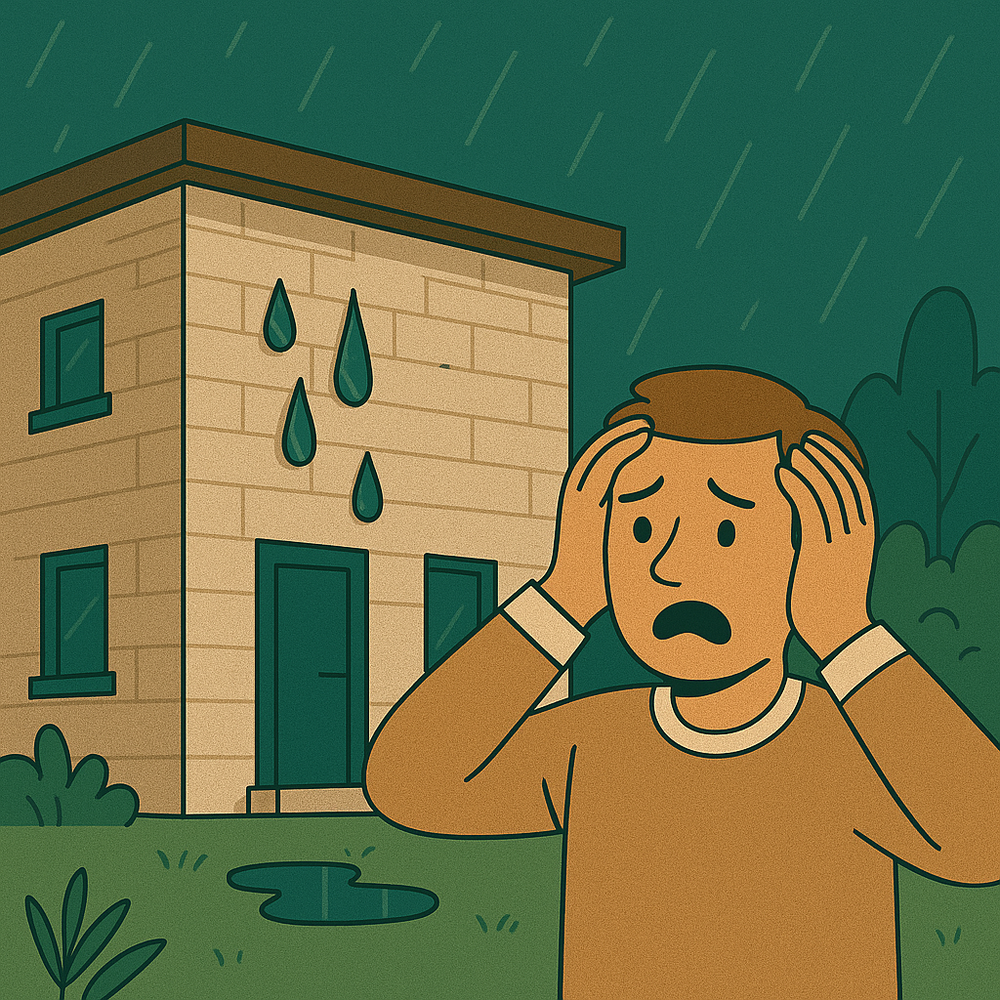
Or that, because of unsuitable window sills, water leaks into the structure, causing wood rot, damaged insulation, and mold.
The same applies to improperly installed windows/doors or poorly executed roof drainage.
The use of poor materials or a superficially waterproofed bathroom? Your problem in a few years.
Mistakes in the installation of electrical and mechanical systems (often due to different contractors) cause penetrations through the wall that interrupt airtightness, which again leads to mold, wood rot, and the deterioration of the house, possibly after just 10 years.
With the aim of saving money, some people decide not to install heat recovery ventilation and at the same time, in this pace of life, forget to air out the rooms. This again practically invites mold and poor air quality.
Even if you are buying a finished property (house, apartment), check the quality of construction and materials as much as possible. You probably do not want to see cracks in the walls after a few years.
Enough examples. Natural, quality materials are not just a passing trend. They ensure a better living environment, fewer emissions, durability, and the long-term sustainability of the house, provided the execution is also of high quality.
+
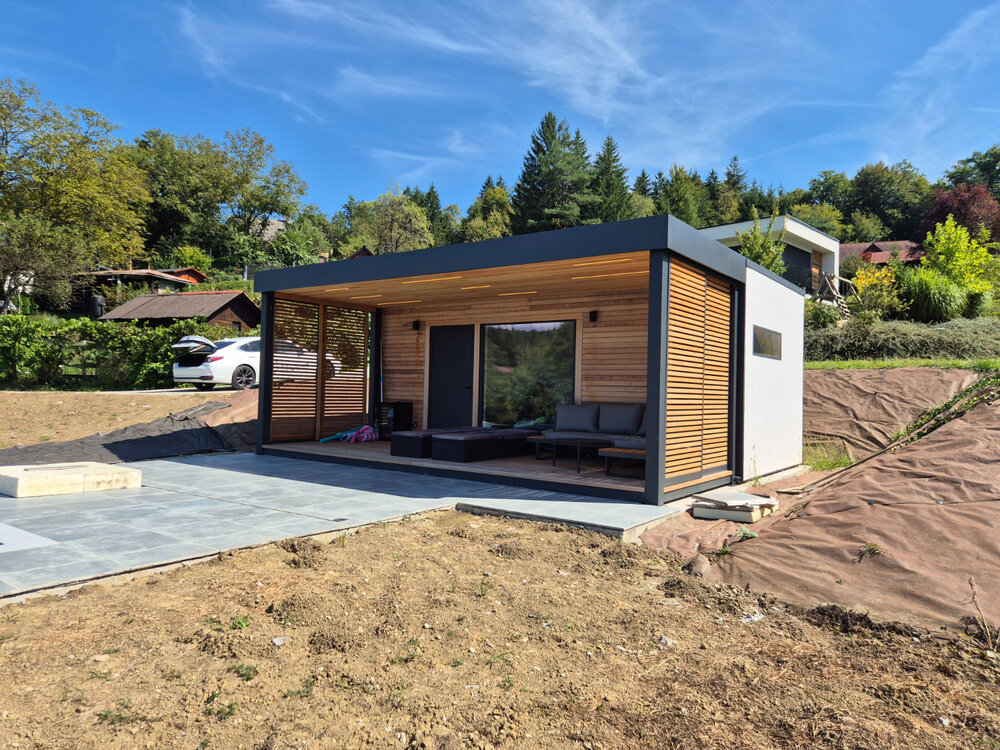
In Cubie modular houses, we use proven, high-quality and natural materials, which ensure a healthy and pleasant living environment. The selection is based on more than 60 years of experience at Hrovat, where we have learned what truly works in practice and what does not. In addition to materials, we also place great emphasis on the execution itself. From precise plans and thorough preparation to the work of a skilled and well-coordinated team that builds in phases with quality control checkpoints. The result is homes or weekend cottages that combine durability, aesthetics, and comfortable living in harmony with nature.
8. Build with people you trust.
The builders' experience, their professionalism and attitude toward you as the investor will be key in determining how smoothly (or stressfully) the construction will proceed. Choose a contractor who stands behind their promises, is responsive to your calls or messages, keeps agreements, has references and clear communication.
+
With Cubie modular homes, our customers especially appreciate exactly this: that we take care of everything, from the first idea to move-in, and remain transparent and responsive the whole time. Together we design your dream little house, then you leave the work to us while you live your life. We simply deliver, place, and install your little house within the agreed timeframe, and it is ready for your new story to be written. No worries, no surprises, no unnecessary compromises, for a fixed price.
9. Less is sometimes more.
A big house is not necessarily a better house. More square meters means a higher investment, more maintenance, higher costs, and more time spent cleaning instead of enjoying the joys of life. A well-designed 60 m² can offer more comfort than a sprawling 120. Think about functionality, light, connection with nature, and the warmth of a homely atmosphere.
May your new home be a place where you can breathe deeply. And may the building process be a journey on which you keep a peaceful heart.
If there is at least a small spark within you of desire for a smaller high-quality residential or holiday house up to 100 m² and you want to make your dreams come true as simply, quickly, and calmly as possible, you are warmly invited to get in touch with us.
Cubie house consultants will be happy to answer any questions you may have about modular construction, show you the materials, houses under construction, and help you design your dream house.
+
(01) 724 82 05 (during business hours: Mon–Thu 8:00–16:00, Fri 6:00–14:00)
Sign up for a series of educational emails about modular construction
Welcome to a series of educational videos where we provide you with more information about modular construction itself.
- What is modular construction?
- Differences between modular and mobile holiday homes
- Its advantages
- How does modular construction take place at Hrovat?
- How are the delivery and assembly of a modular house carried out?
- We address common questions...
At the same time, we also familiarize you with the pitfalls of traditional and prefabricated construction that you may not have considered. By subscribing to the e-newsletter, you will, over time, receive more than 15 educational short videos.


