Modular, timber frame, prefabricated, or classic masonry construction?
Publication date: 5. june 2025
In today's time, when the construction world is developing at an incredible speed, more and more people are faced with the question: "What type of construction is most suitable for me?" Modular, timber-frame, and prefabricated construction are terms that often appear, but many do not know the main differences.
Modular, skeletal, prefabricated, or traditional construction? What to choose and why?
In the article, we simply explain what the differences are.
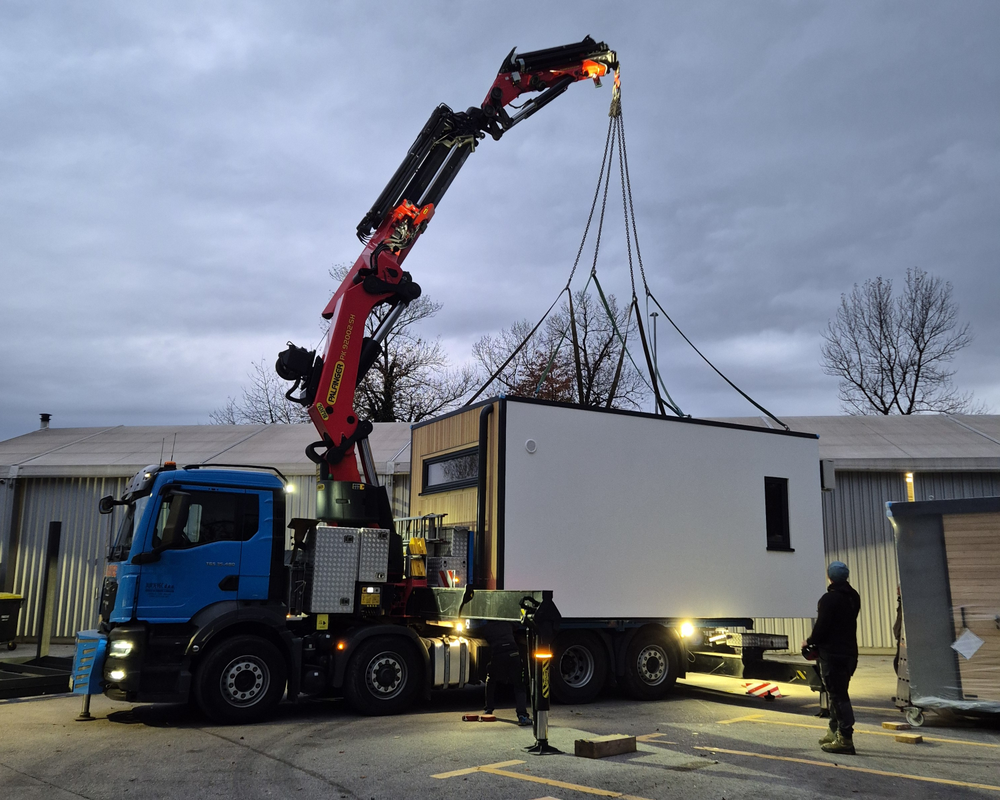
What is modular construction?
Modular construction means that the house is prefabricated in production in the form of modules.
These modules are already equipped with all key elements (floors, walls, electrical and plumbing installations, bathroom, and sometimes even furniture), and then all that remains is to deliver them to your plot and assemble them airtight,assemble, and complete the final connections.
Key characteristics of modular construction:
- Each unit (module) is an independent structural whole.
- Modularity allows for easy assembly, upgrading, combining, and mobility over time.
- Construction is fast, controlled, and takes place within production, so materials are not exposed to adverse weather conditions.
It is usually based on a wooden frame system.
Advantages:
- Speed of execution: the house can be erected in one day and then be practically ready to move into. If the house is larger, it is completed in 1-10 days, depending on the number of modules.
- A house made of natural material - if wood is used for the frame.
- Controlled quality in production - more sustainable construction.
- Turnkey price, with no unexpected costs.
- Simplified paperwork for obtaining a building permit.
- Less construction waste.
Practical example: Cubie modular residential houses are a perfect example of modular construction. They are designed to grow together with your wishes - today a mini house for two, tomorrow a house for a family of four.
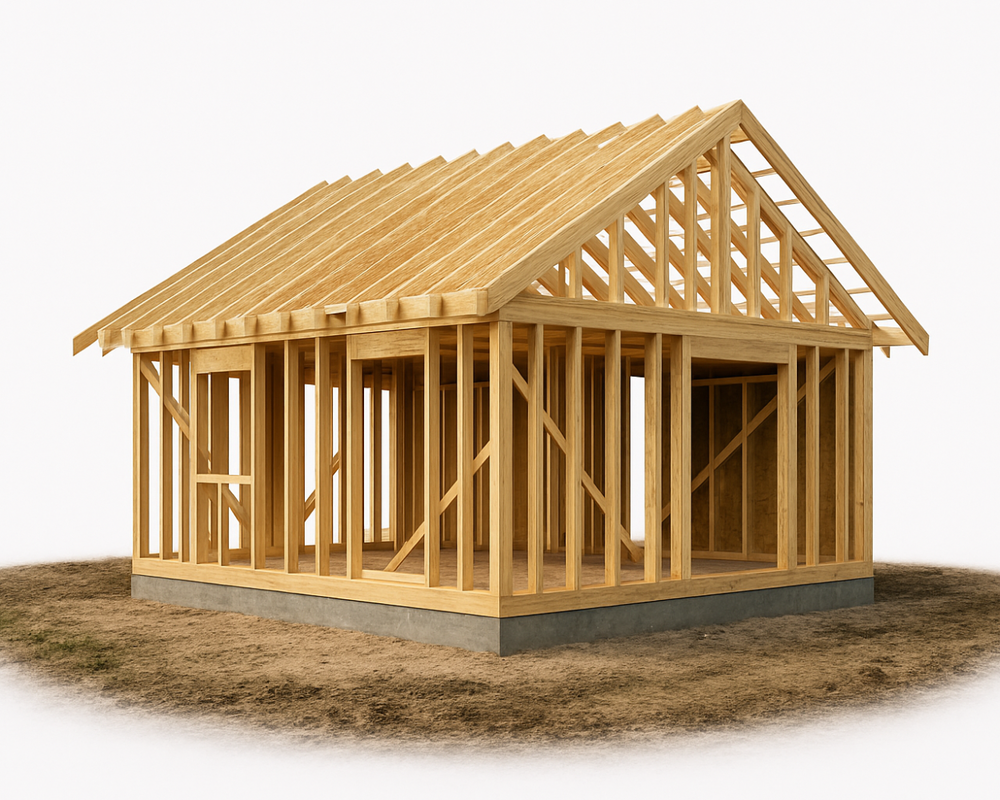
What is skeletal construction?
Construction where the load-bearing capacity of the building is taken on by the frame - that is, columns and beams, rather than the walls. A wooden structural system is often used.
Skeletal construction and key characteristics:
- An ideal basis for modular construction.
- It can be carried out on-site or in combination with modular production.
Advantages:
- Architectural freedom due to the good load-bearing capacity of the material or the structural composition.
- Less material for greater load-bearing capacity. Faster construction compared to traditional masonry construction.
- A house made of natural material, if wood is used for the frame.
Practical example: Cubie modular houses are made from a wooden load-bearing structure, but in modules, in a controlled production environment.
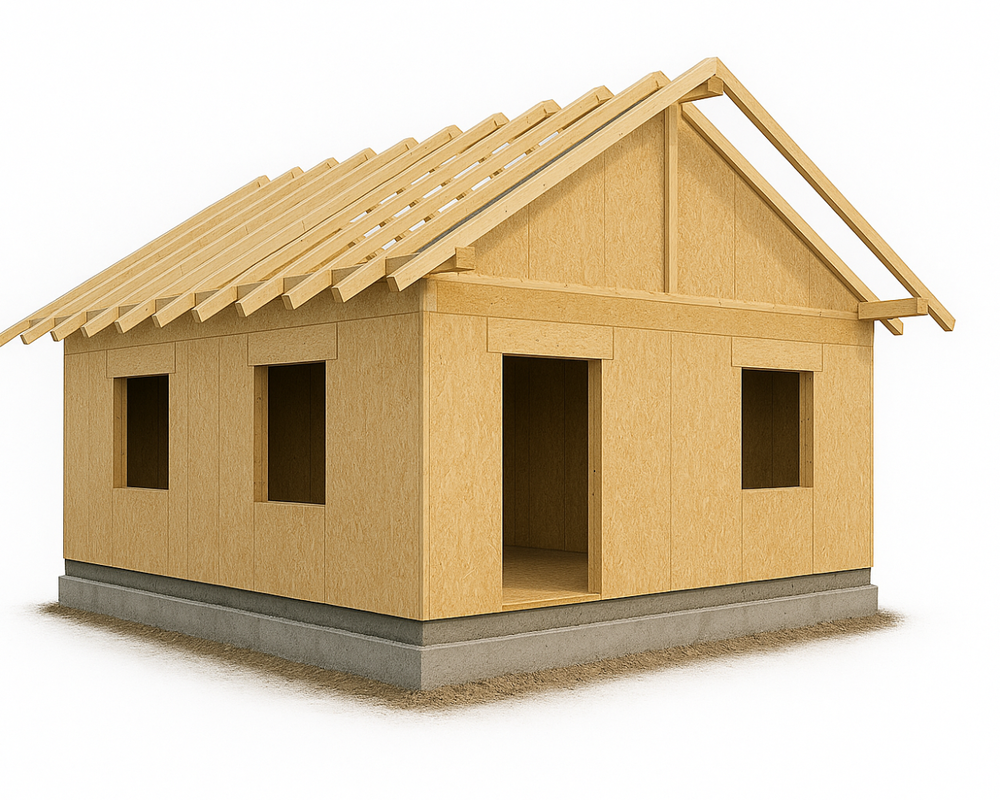
What is modular construction?
In prefabricated construction, the main elements (walls, ceilings, floors) are made from large wall panels, which are also load-bearing.
These walls are then assembled on-site into a whole - like a huge puzzle. Most commonly, these are wooden (e.g. CLT-cross-laminated timber), concrete, or SIP panels.
Then the installations and exterior finishes follow.
Prefabricated construction and key characteristics:
- A system of CLT panels or SIP panels is often used..
- The house is assembled like a 'puzzle' on-site in 1-2 weeks (assembly), followed by: connection of installations, interior and exterior works.
Advantages:
- Fast and dry construction compared to traditional masonry construction.
- Turnkey price.
- Built faster than masonry construction.
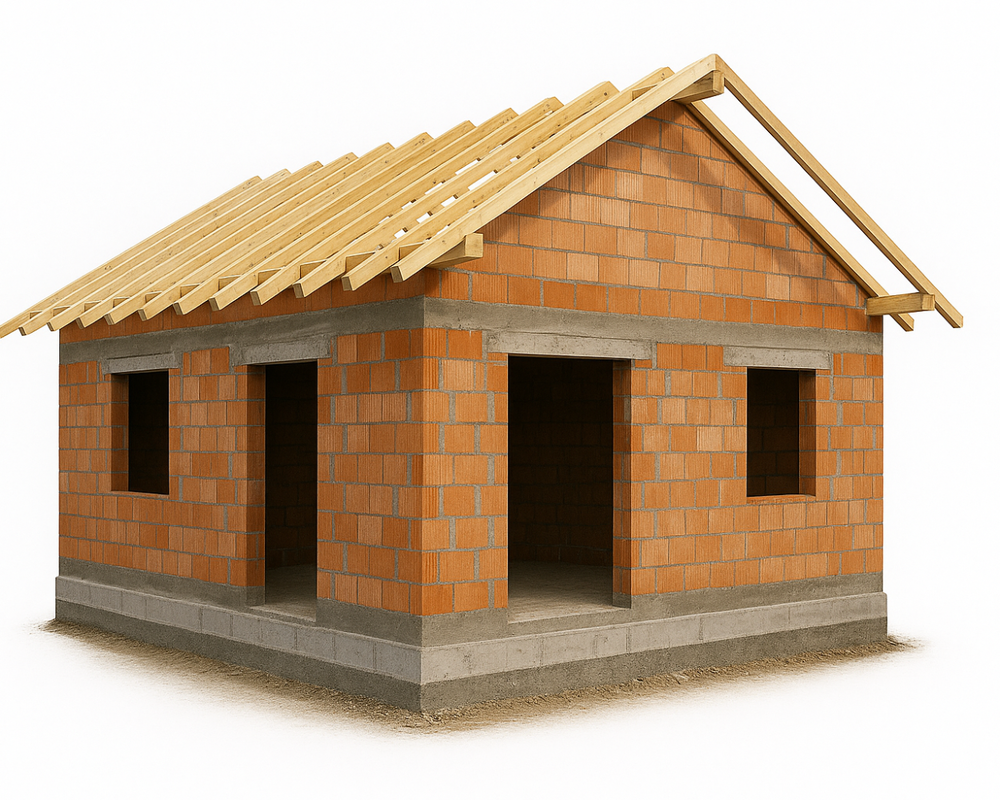
What is masonry construction?
Masonry construction is a traditional way of building houses and structures, in which the load-bearing structure is built from bricks, concrete blocks, stone, or concrete. It is a so-called "wet construction", as it involves a lot of cement, mortar, and water, which means that it is highly dependent on weather conditions and drying times.
Which type of construction is most suitable for whom?
• Traditional masonry: For those who want traditional, robust construction and for whom time is not an obstacle.
• Prefabricated: For families or individuals who want a turnkey house and do not want to embark on lengthy traditional masonry construction.
• Timber-frame: For lovers of natural materials, flexible floor plans, and sustainable living. For people who want to devote their time to this type of construction.
• Modular: Ideal for quick move-in, quality living, mobility, single-story buildings, and gradual home expansion. For people who want a house without stress and want a 'turnkey' house.
Which one to choose?
The one that suits your lifestyle, available time, and financial framework.
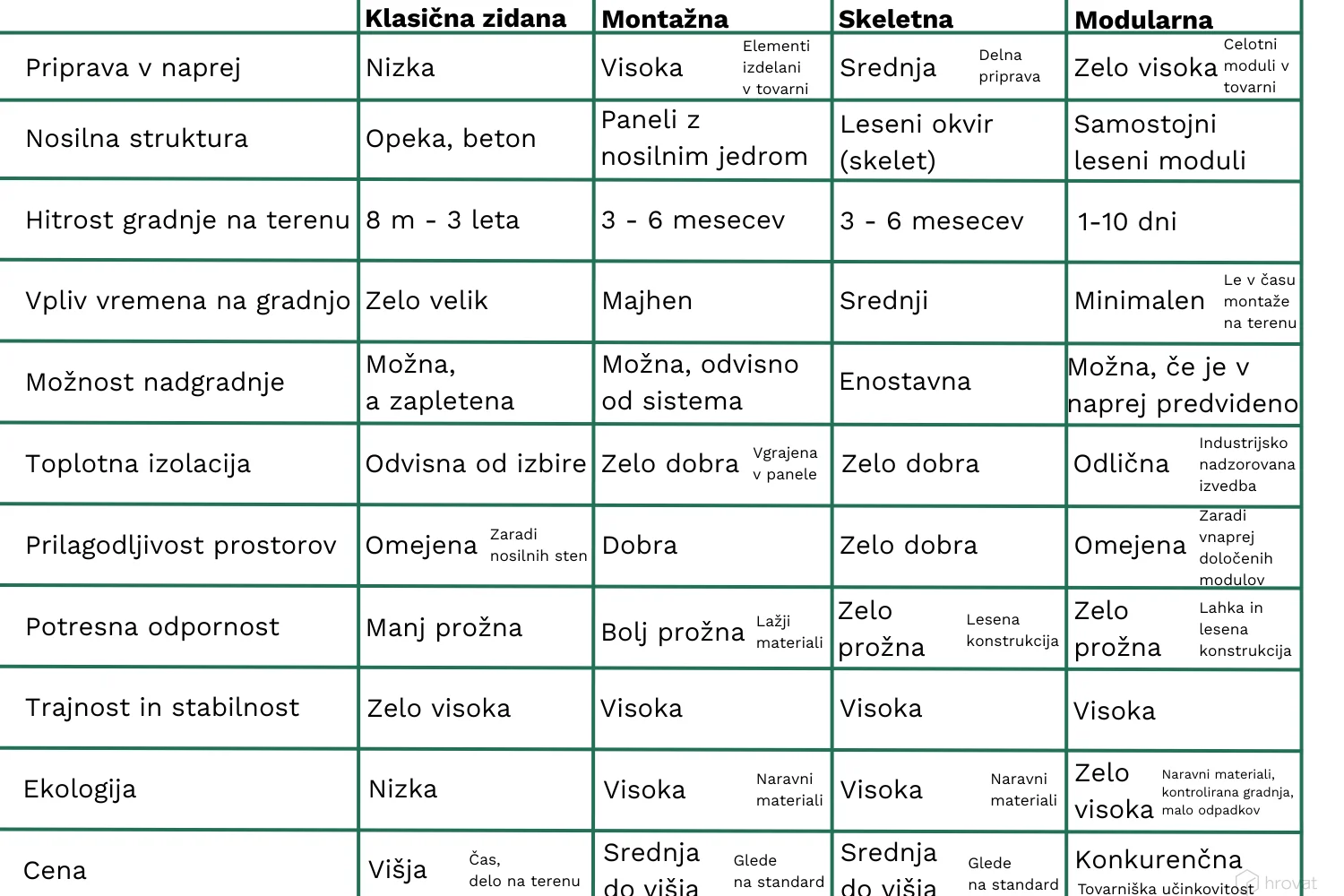
Below, we have prepared a COMPARISON TABLE of the mentioned construction types for you. Because we want to be objective, we will not comment on the results.
Why do we at Hrovat swear by the modular timber-frame system?
At the Hrovat family business, with more than 60 years of tradition, we follow a vision of construction that connects natural materials, aesthetic refinement, quality living, and a modern lifestyle.
Our Cubie houses are designed as a modular timber-frame system - which means they are strong, adaptable, and extremely quick to assemble at the same time.
Would you like more information about modular construction?
Write to us or visit us, and together we will find the right solution for your home in harmony with nature.


