Siberian larch
What kind of wood do we use?
We use native Siberian larch, which is much more durable than plantation-grown Siberian larch, which most manufacturers use because of its lower purchase price.
Forests in Siberia are mostly dense. There is very little space between the trunks, so only a small amount of sunlight reaches each individual tree. As a result, the trees grow slowly and mainly upward so they can absorb sunlight. Because they grow slowly, growth rings form in the trunk very close to one another. Thus, native Siberian larch in the vast majority of cases has more than 10 growth rings per 1 cm of cross-cut surface.
Plantation-grown Siberian larch contains approximately 3 to 5.
Density is a very important factor for durability. The denser the wood, the more durable it is. A board that contains more than 8 growth rings per 1 cm of cross-cut surface is classified as resonance wood. Resonance wood "works" very evenly. With increased moisture, it expands evenly, and with increased sunlight, it shrinks evenly. This makes the possibility of cracks and warping in the wood much lower. Since the only source of sunlight in Siberian forests is from above, the branches also grow higher to absorb it more easily. A large part of the trunk therefore remains branch-free, and such material contains almost no knots and resin, which also impair the appearance and functionality of the final product. In the heartwood, stresses combine there after felling due to changes in moisture, and in most cases the wood cracks there. Therefore, we saw out the core before further processing the material. Even so, a knot may still remain in the end. Those that could fall out in the future are drilled out, and an artificial knot is fixed in that place so it does not fall out. Finally, the entire surface is planed and sanded twice so that the final appearance is flawless. For extra shine, we also oil the boards before installation at the customer's request.
Note: the density of the wood depends on the supplied raw material, so we cannot influence this factor. Usually, however, about 80% of the delivered wood is resonance wood. More about Siberian larch. More about larch.

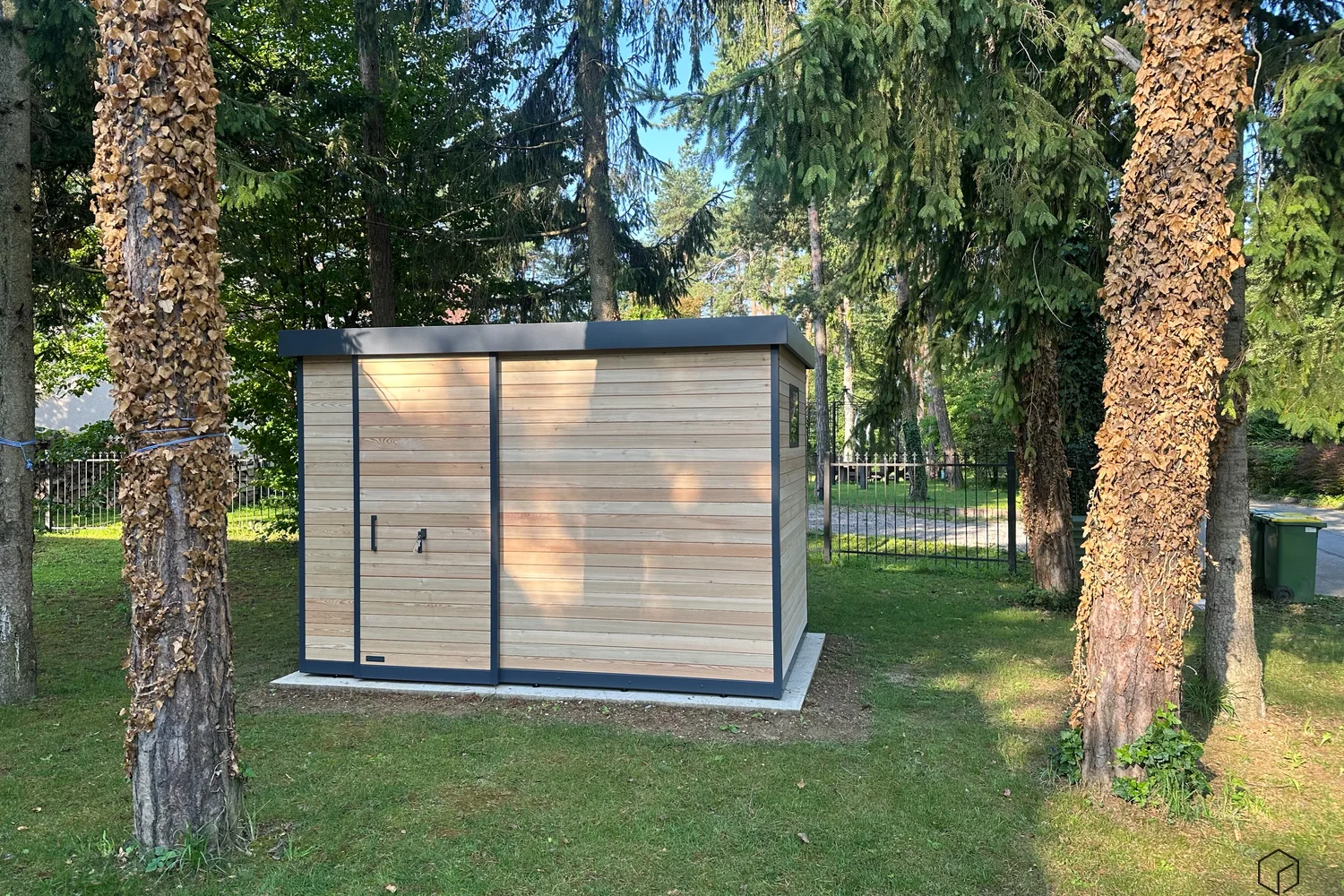
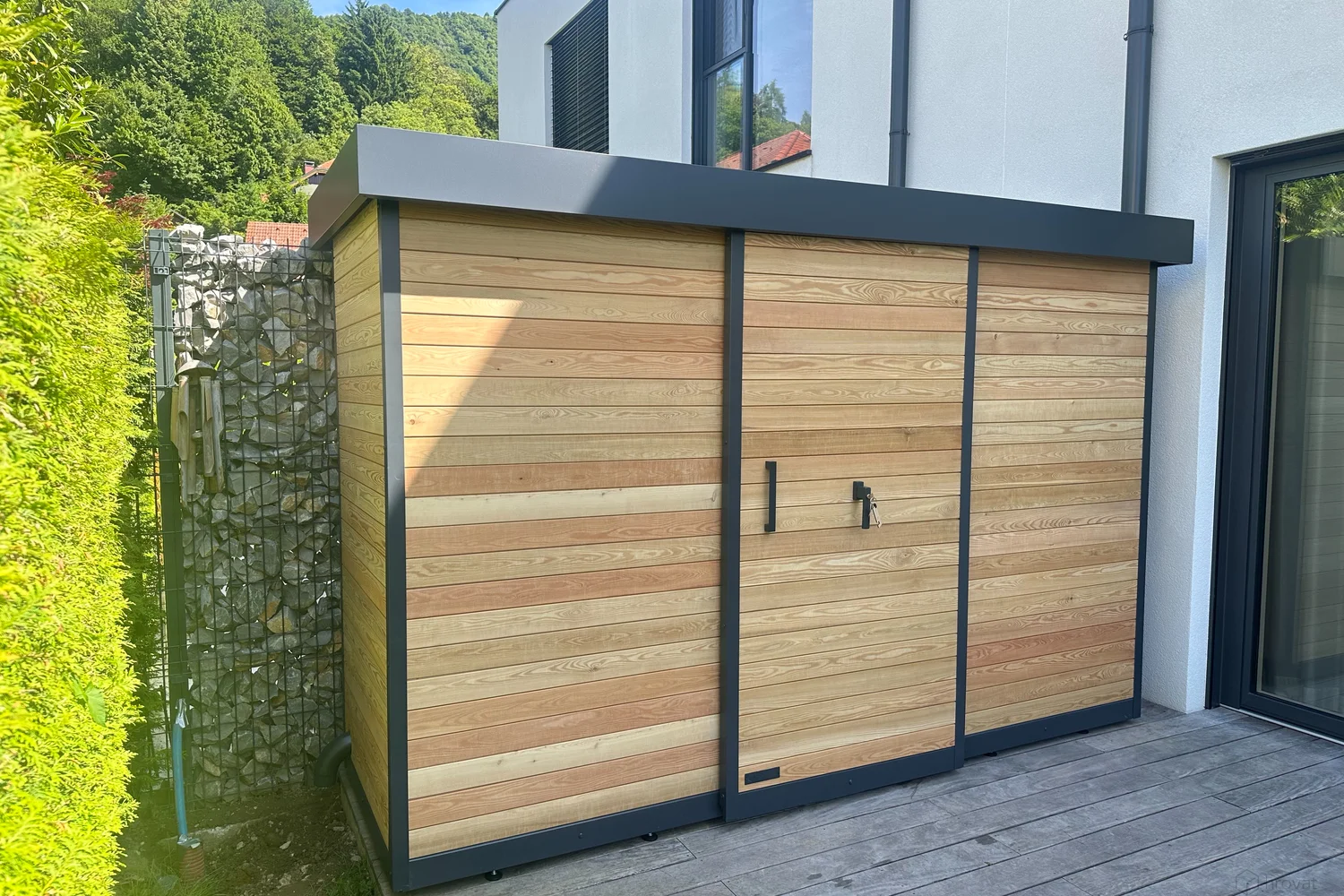

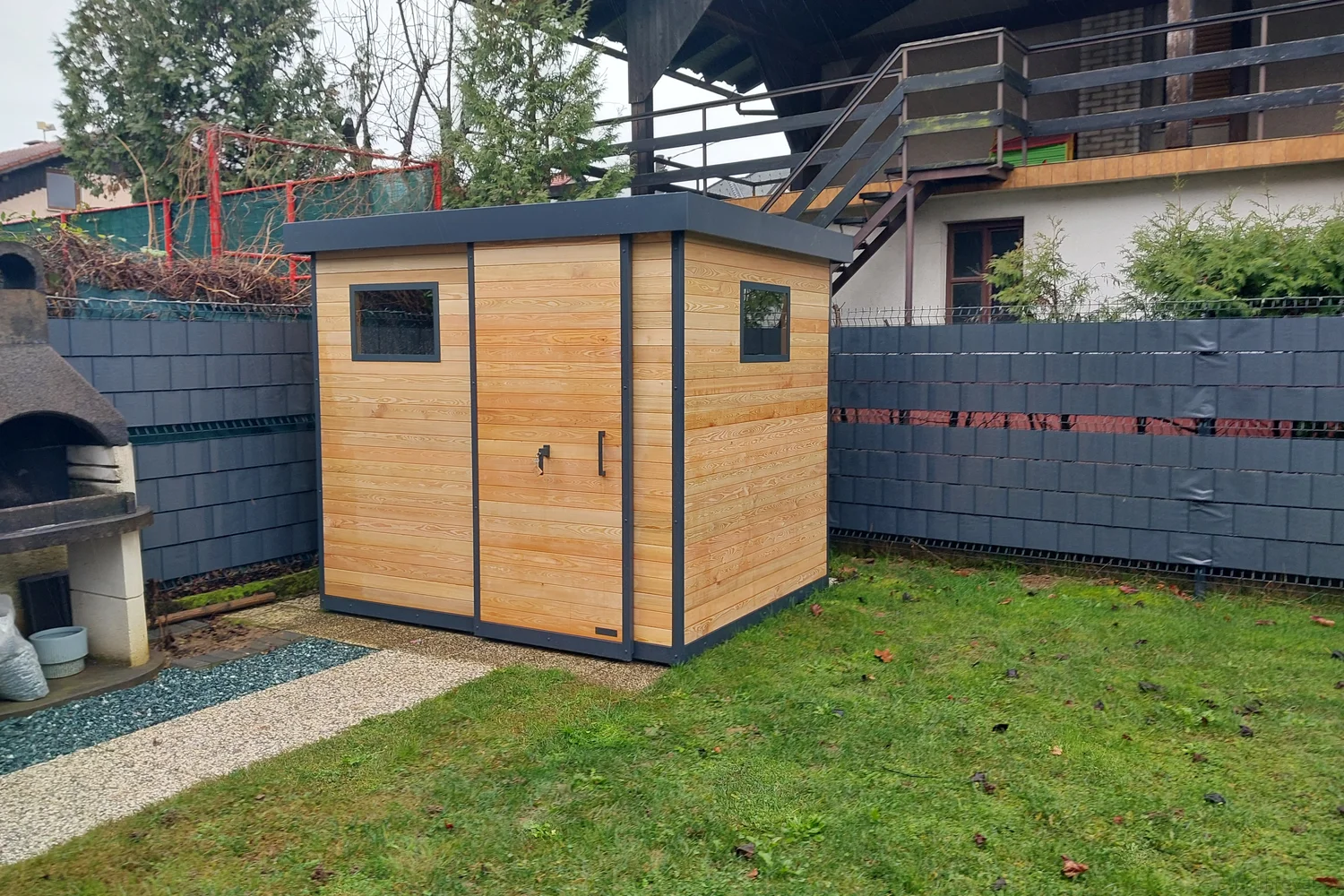


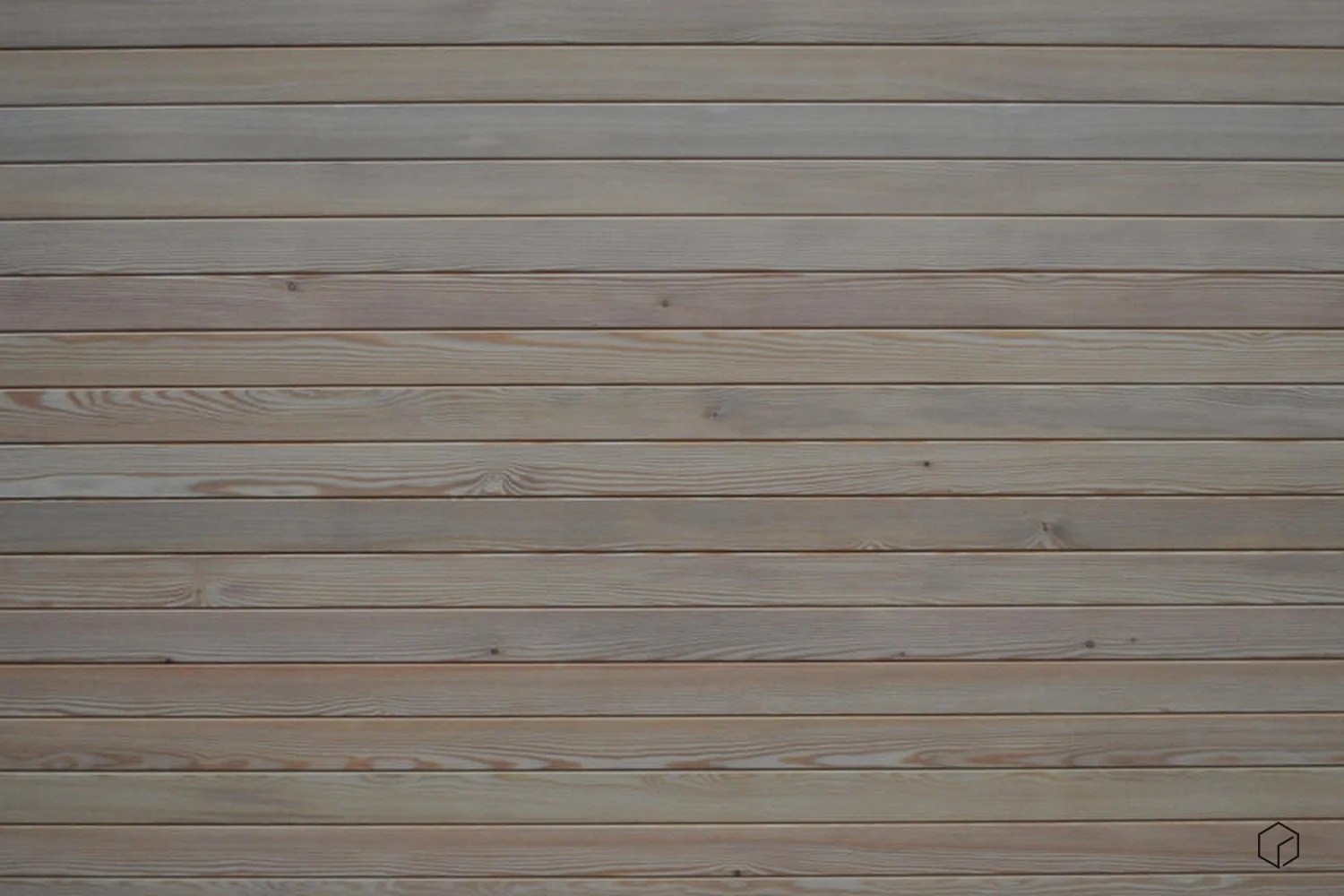
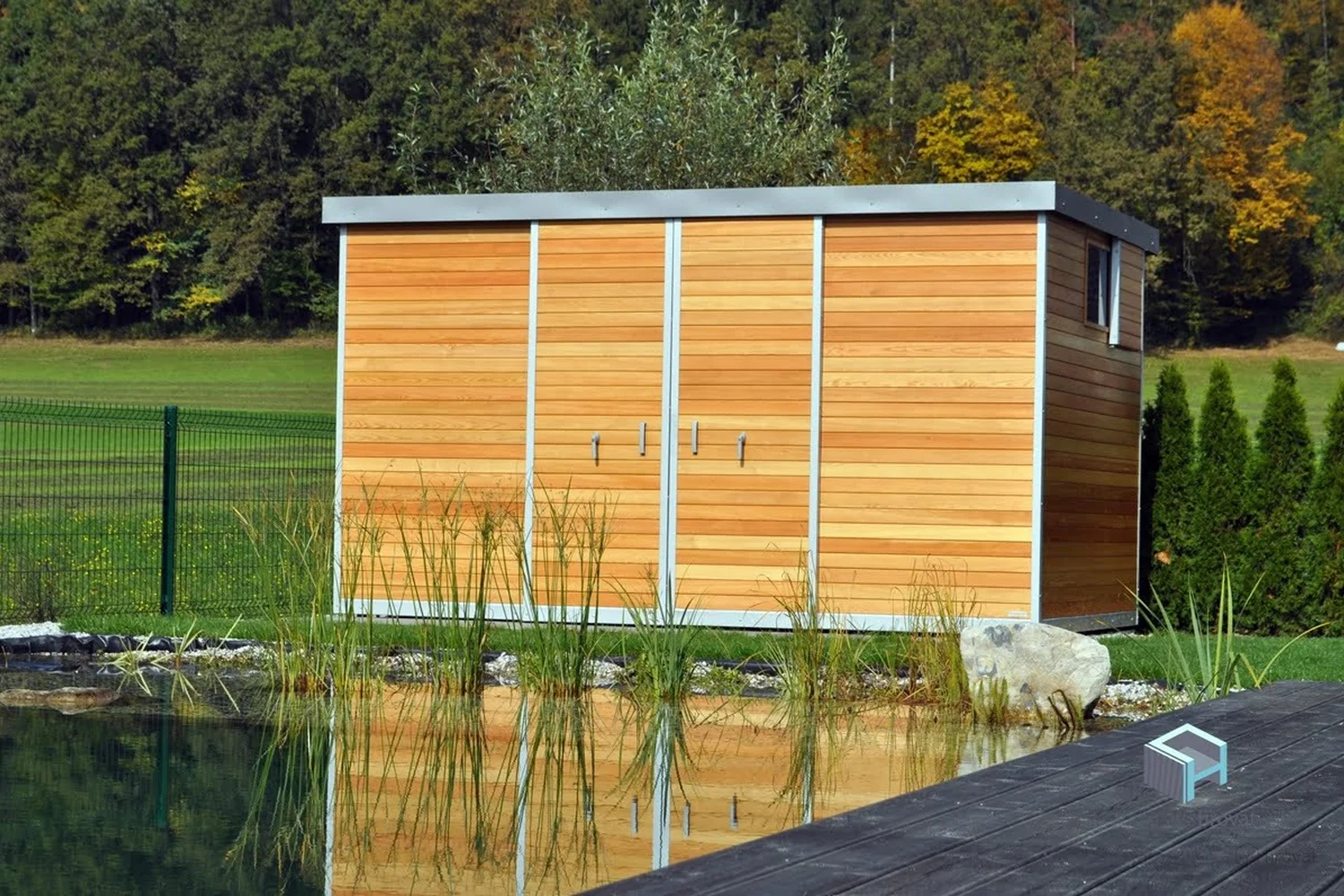
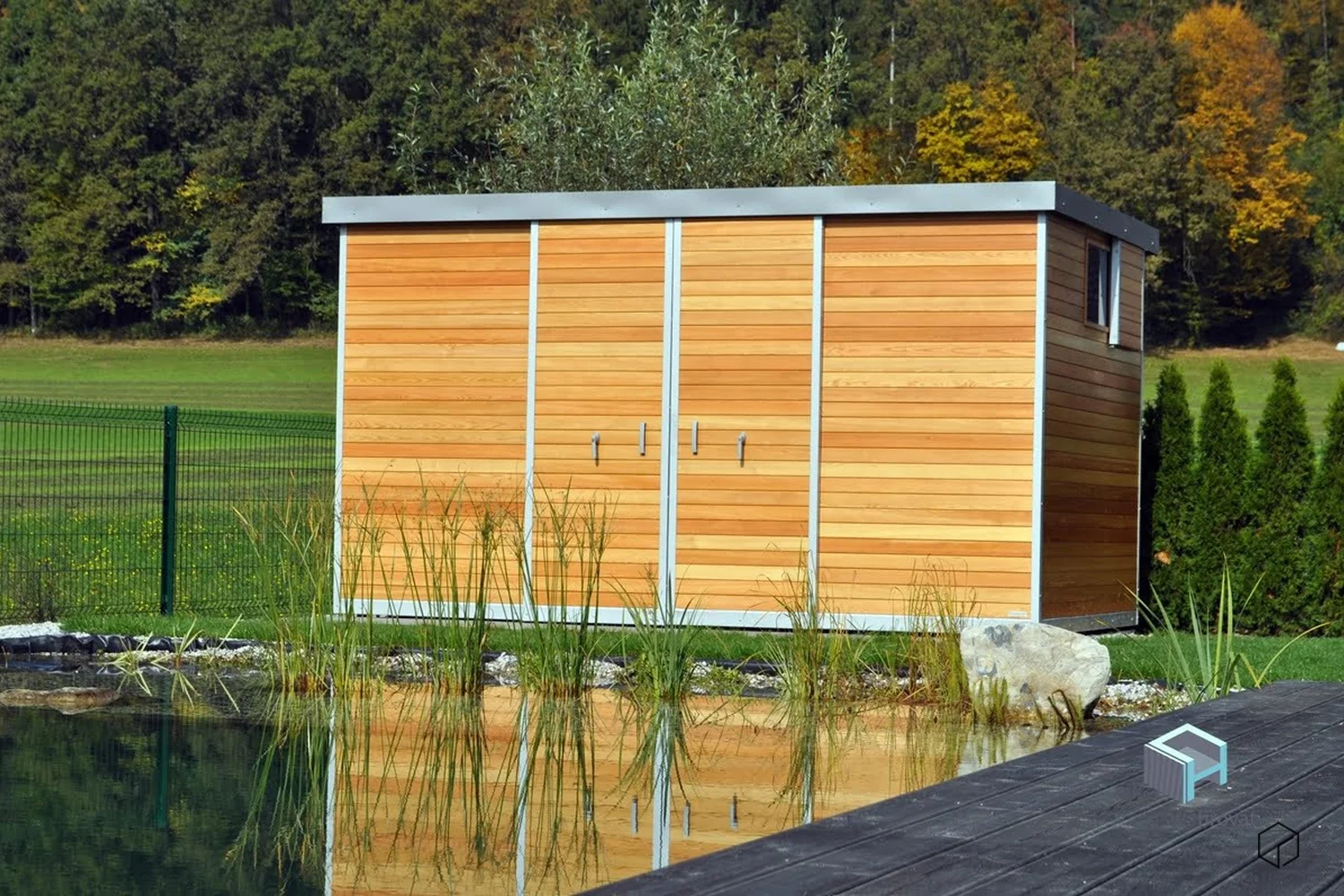

Wood graying
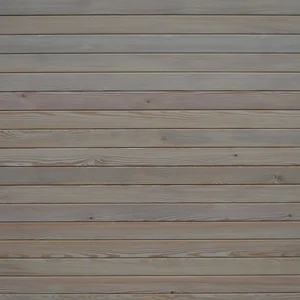
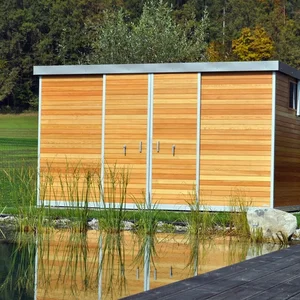
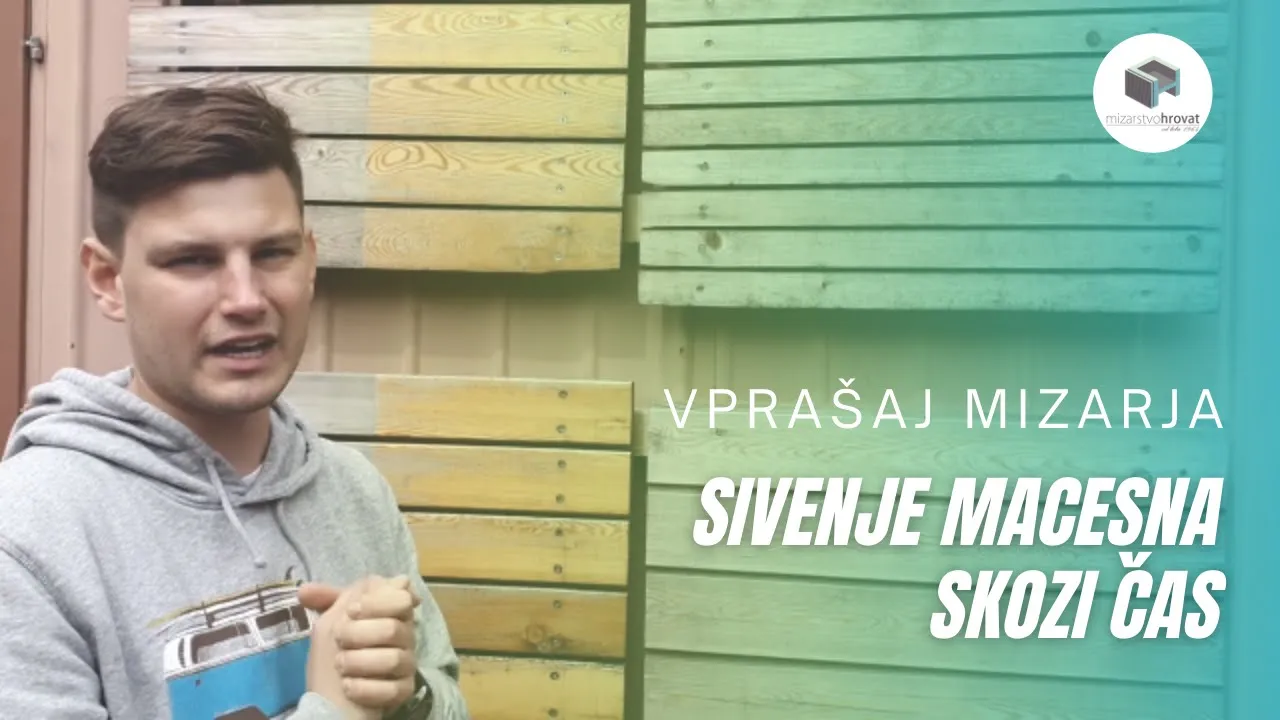
Surfaces that are frequently in contact with water gradually turn gray over time. The graying process usually takes a few years. In areas more exposed to water, the wood begins to gray sooner; in other areas, later. This is the result of a chemical reaction between substances in the wood and acidic compounds in the rain. Over time, the gray tone evens out across all surfaces and the color no longer changes. As it grays, the wood forms a natural protective layer that cannot be removed. In areas where contact with water is minimal or nonexistent, you can slow down graying by oiling the surface regularly.
We recommend that you let the wood keep its natural appearance, as this is precisely what gives wood its special character. This way, you avoid maintenance costs and have no worries in the future.

About the larch tree
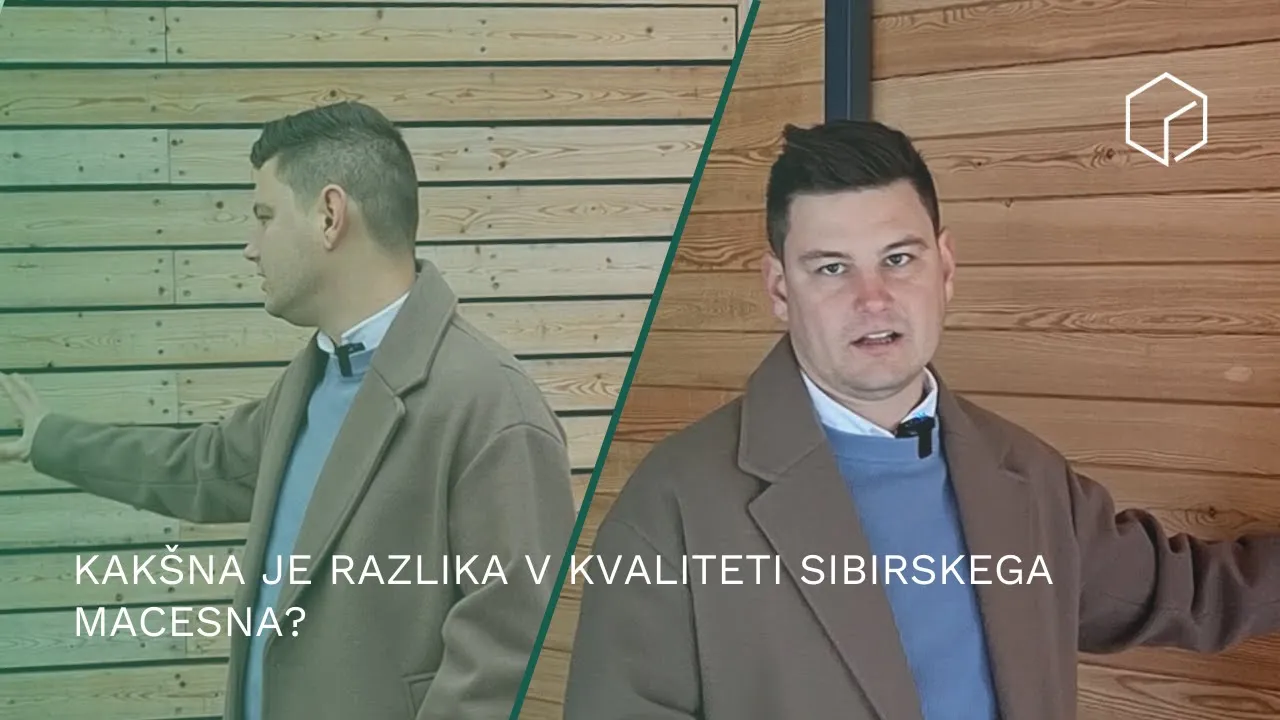
Siberian or Russian larch is a conifer whose needles turn golden yellow every autumn before they fall. It is a close relative of our European larch. The appearance of the tree differs characteristically from our larch in the shape of its crown. The tree grows 25–30 m tall and its trunk can reach a diameter of up to 1 m. The largest specimens were found in the Urals (height 48 m and diameter 360 cm) and in Mongolia (height 49 m and diameter 300 cm). It is very long-lived; specimens 750 years old have been found.
The natural range of Siberian larch extends from western Russia (near the Finnish border) to the Yenisei basin in central Siberia, and further east to Irkutsk. It is a tree species resistant to low temperatures and extreme growing conditions; it grows faster than most other species in cold regions and needs only an enormous amount of sunlight. In Finland and Sweden, Siberian larch is grown on plantations.
Siberian larch wood is distinguished above all by its exceptional durability and resistance to fungi. Compared to the wood of other conifers, Siberian larch has higher density, medium hardness, and relatively higher strength.
Siberian larch wood is very decorative. It is most often used for products intended for outdoor use: boats, structural timber for various buildings, cladding, roof structures, garden furniture, joinery, railway sleepers, mine timber, for the surface of tracks on velodromes …
Various problems and defects occur when processing Siberian larch wood: difficulties during drying – cracks and uneven moisture profile after drying, knot checking; high resin content, which tends to stick to blades and tools, splinters, a large difference between the density of earlywood and latewood, frequent presence of compression wood, spiral grain. The wood is dimensionally very unstable.
When screwing and nailing, the wood tends to crack because of its low shear strength and fairly high hardness. Splinters also present a problem during processing. When gluing, the dimensional instability of the wood can cause problems. Drying Siberian larch wood is difficult and more time-consuming compared to the wood of other conifers.
Radial boards cause the fewest problems during processing; they also have the best properties, the greatest dimensional stability, and crack the least.
Text author: Irena Leban
SOURCES:
Wikipedia: Larix Sibirica
BorealForest: Siberian Larch
Conifers: Larix Sibirica
Heikkonen, S. et al. 2007. KILN DRYING OF SIBERIAN LARCH (Larix sibirica) TIMBER. Research report. Mikkelin ammattikorkeakoulu. Mikelli. 96 pp.
Your professional advisor

Marko Hrovat
representative and co-owner
I will be delighted to answer all your questions and concerns.
I can be reached at the phone number 01 724 82 05, from Monday to Thursday between 8 AM and 4 PM and on Fridays between 6 AM and 2 PM or at the email address info@hrovat.net
Hrovat company in the media
Follow us




CO2-neutral craftsman


-
successful business years of the family company
-
 +
+Cubie houses made
-
No.
in modular construction from natural materials
-
dedicated and professional colleagues
-